CONDITION MONITORING
Condition Monitoring Solutions for Discrete Manufacturing
Condition Monitoring Solutions for Discrete Manufacturing
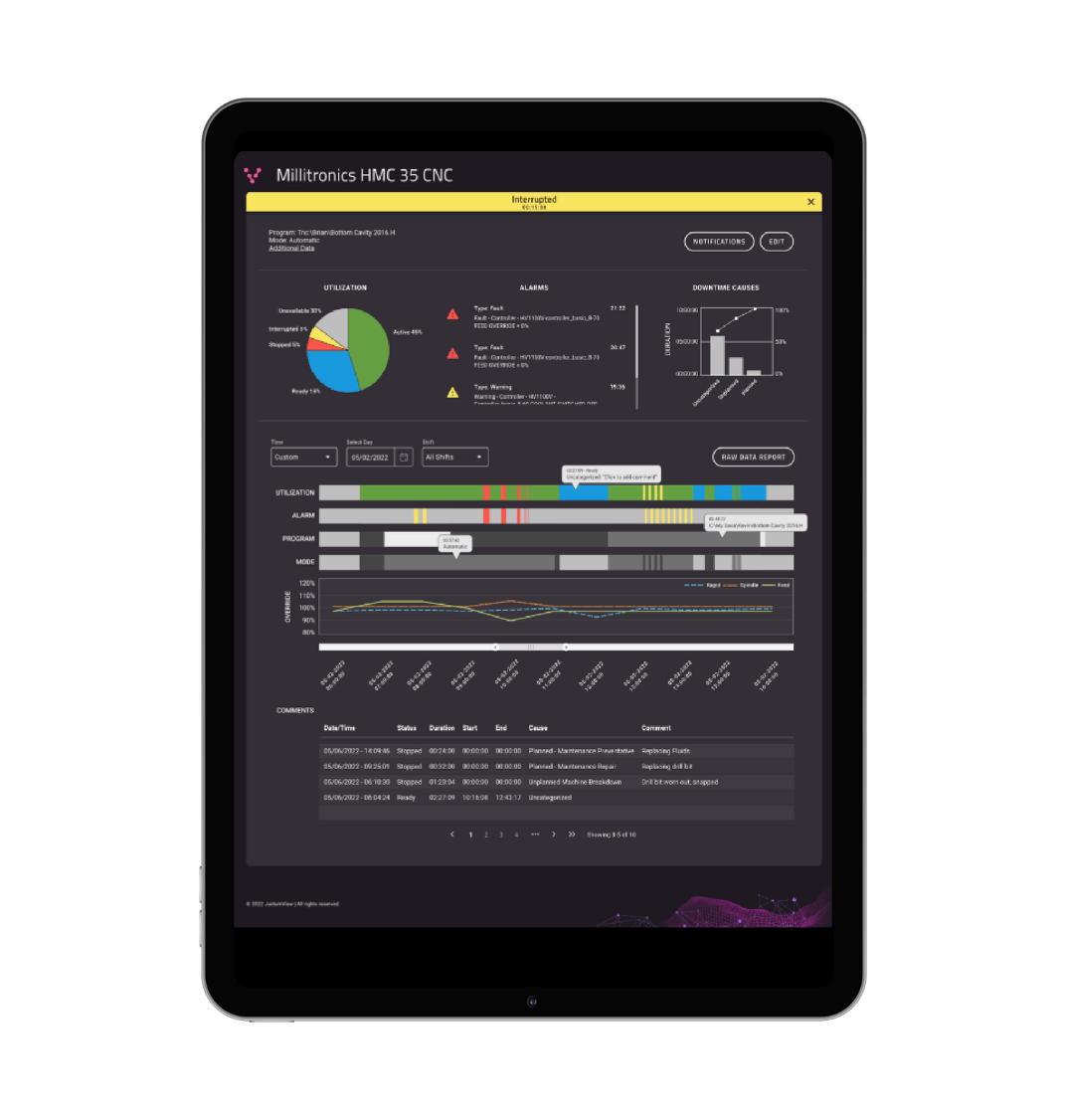
Most equipment failures do not happen without warning. They develop over time through changes in alarm patterns, signal behavior, drive temperatures, and other measurable indicators that precede the failure itself. Give your operation the continuous, standardized machine data it needs to see equipment health clearly and act before problems compound.

CAPTURE DEEP MACHINE DATA
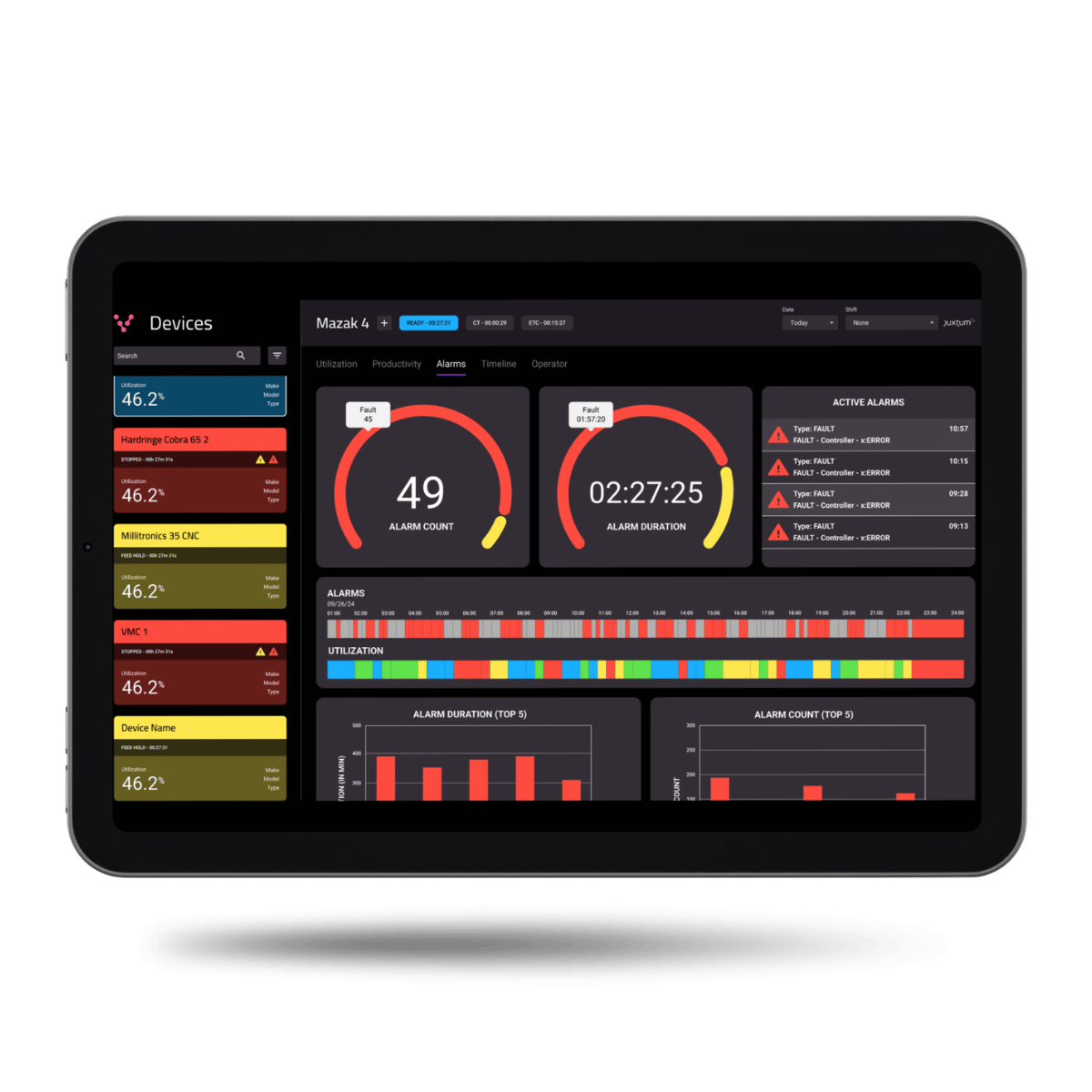
Go beyond basic machine states with access to signals like load, alarms, feed rates, and overrides, configured to the data that matters to your operation.
SEE CHANGES, NOT JUST STOPS
Understand shifts in operating conditions in real time, not just when a machine goes down, so you can respond earlier and keep production running smoothly.
REDUCT UNPLANNED DOWNTIME
Catch issues earlier and respond before they disrupt production with real-time data when evaluating machine health and performance
THE GAP
The Cost of Operating Without Condition Monitoring
The Cost of Operating Without Condition Monitoring
Without continuous visibility into how your equipment is performing, maintenance decisions default to two options: respond to failures after they happen, or service equipment on a fixed schedule regardless of its actual condition. Both approaches carry costs that condition monitoring systems are specifically designed to reduce.

Unplanned failures are expensive
When equipment fails without warning, the costs compound quickly. Emergency service calls, overtime and weekend labor rates, expedited parts procurement, idle downstream equipment, and missed production targets all arrive at once. In a multi-process production environment, a single unplanned failure can stop an entire line. The repair itself is rarely the largest expense. The cascading production losses are.

Maintenance without data wastes resources
Time-based preventive maintenance schedules service equipment on a calendar rather than on true condition. Parts get replaced before they need to be. Maintenance labor gets spent on assets that do not yet require attention while developing issues on other machines go undetected between intervals. Without continuous signal and alarm monitoring across every asset, the maintenance schedule is an estimate, not a plan.

Manual monitoring won’t scale the shop floor
An operator can directly observe one machine. A supervisor can walk the floor periodically. Neither approach generates the continuous, standardized equipment data that effective condition monitoring requires. In discrete manufacturing environments running even 20 machines, manual monitoring leaves critical gaps that only become visible when something goes wrong.
OUR APPROACH
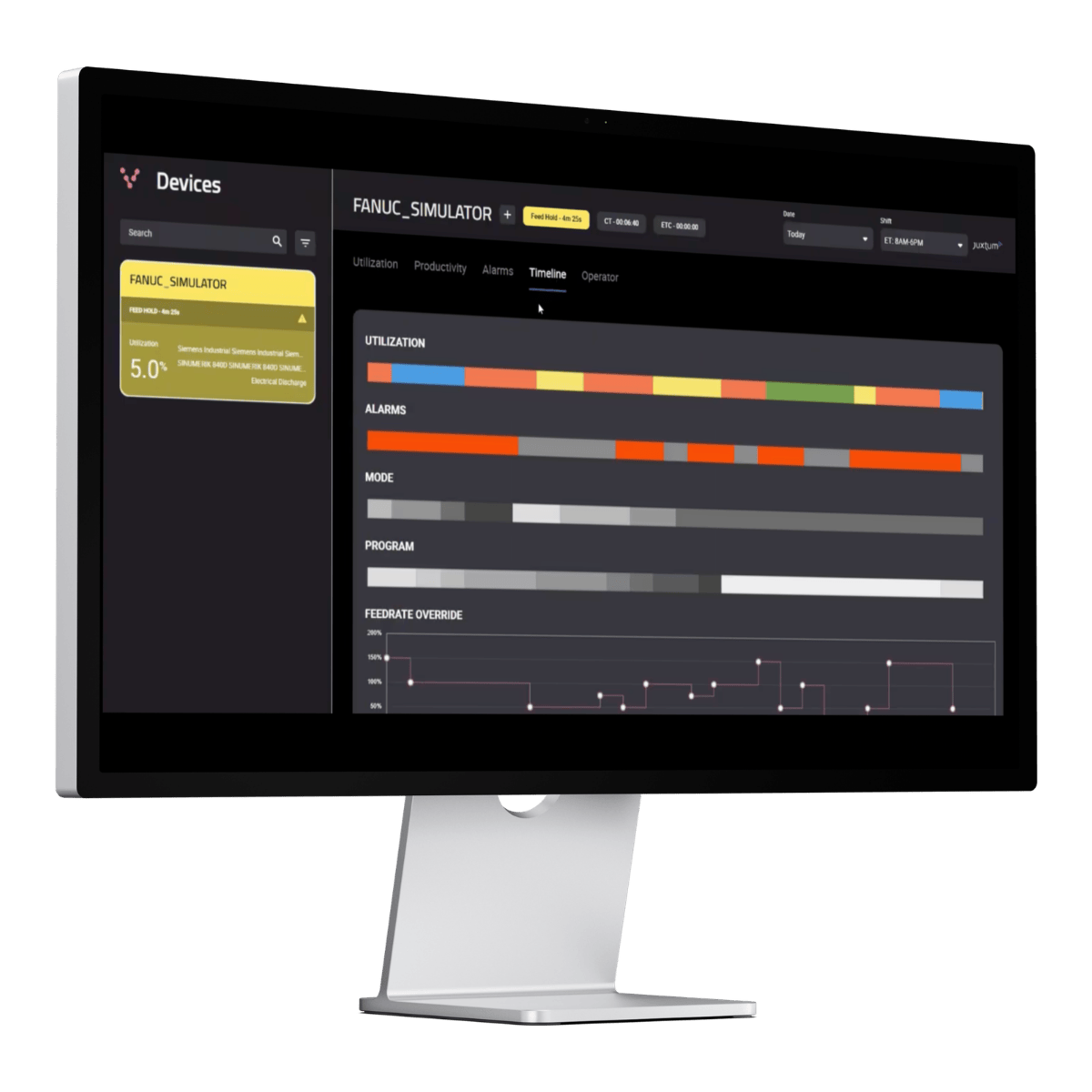
How Juxtum Delivers Condition Monitoring Across Your Operation
How Juxtum Delivers Condition Monitoring Across Your Operation
THE IMPACT
What Condition Monitoring Makes Possible
What Condition Monitoring Makes Possible
OUR EDGE
Why Manufacturers Choose Juxtum for Condition Monitoring
Connection across entire asset base
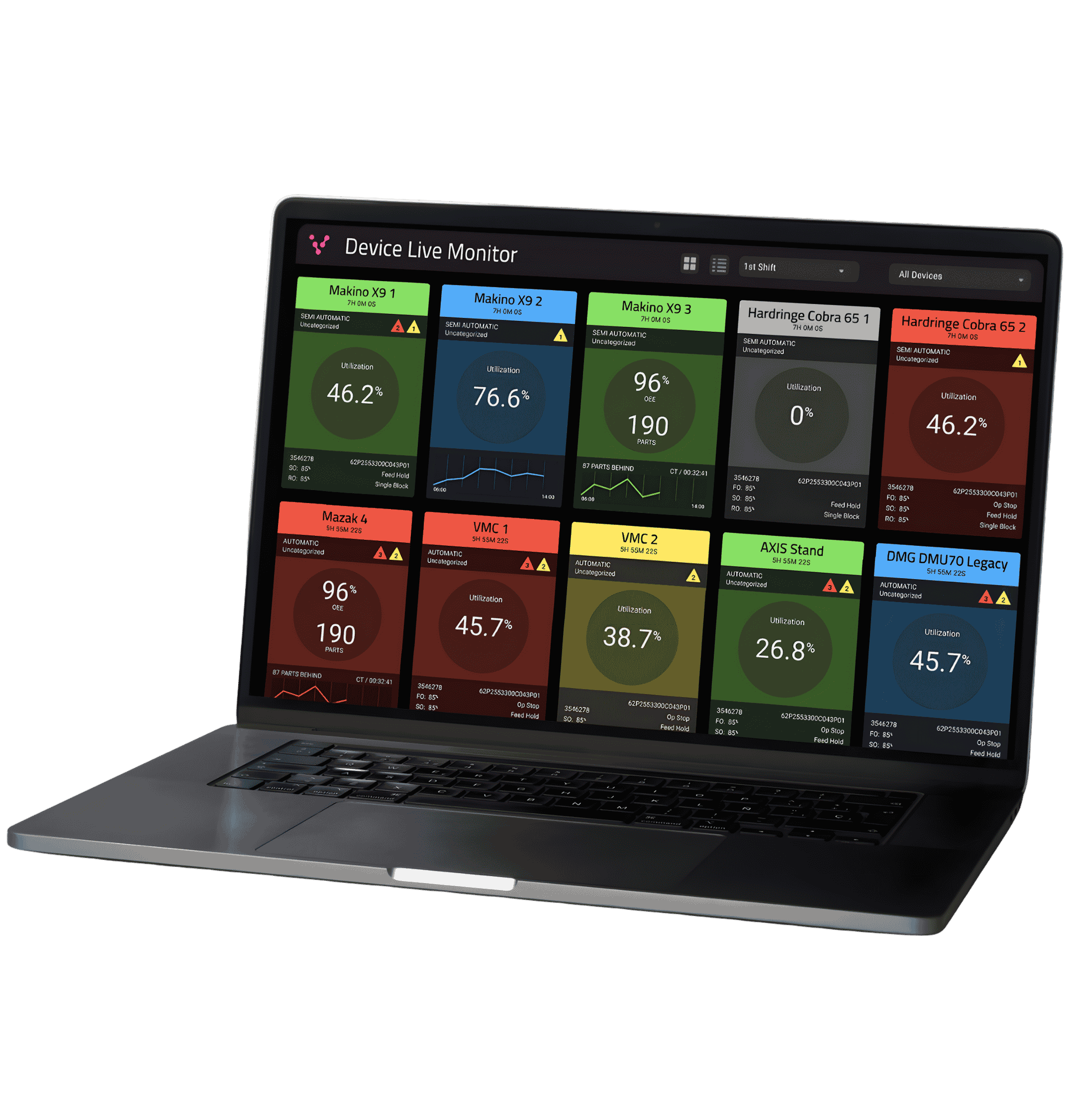
Our patented automatic discovery technology connects to any manufacturing asset, regardless of age, brand, or control type. Where competitor solutions leave legacy equipment unconnected and create gaps in condition monitoring coverage, Juxtum gives you a complete picture across every machine on your floor.
Cloud or on-premise deployment
Deploy in the cloud for rapid time-to-value, or on-premises for manufacturers with strict data security requirements. This is a critical distinction for aerospace and defense facilities where production data must stay within facility boundaries. Most monitoring solutions offer cloud-only. Juxtum gives operations teams the choice.
Integration with the systems you already have
Juxtum is not an ERP or MES. It fills the machine data gap those systems cannot address and delivers standardized equipment data to the platforms your team already relies on, including ERP systems, MES platforms, databases, Power BI, and third-party analytics tools.
See Your Equipment Health in Real Time
The manufacturers with the clearest picture of what is happening on their shop floors are the ones best positioned to act on it. If your maintenance decisions are still driven by schedules, assumptions, or the last failure event, the opportunity to change that is within reach, using the equipment you already own.