
PROCESS OPTIMIZATION

Process Optimization Starts With What Your Machines Are Telling You

Manufacturing operations have more opportunity than they realize, and most of it is already on the shop floor. Close the gap between assumed and actual performance with real-time machine data for manufacturing process optimization.

CONNECT ANY MACHINE

Easily collect and standardize data across your shop floor. No gaps, regardless of age or control type.

TRACK PRODUCTION PERFORMANCE

Replace manual inputs with real-time performance data across shifts, jobs, and facilities to understand where time and output are being lost.

INCREASE ASSET UTILIZATION

Reduce idle time, optimize production processes, recover lost capacity, and get more output from the equipment you already run.

THE GAP

Where Manufacturing Efficiency Is Actually Lost

Efficiency is lost in small ways across the shop floor. Without clear, up-to-date information, minor slowdowns add up and problems go unnoticed. Seeing what’s really happening is the first step to running smoother, faster, and smarter.

Cycle time drift slows production

Industry benchmarks consistently show machines only running at about 60% of their available time, a gap caused by multiple small losses across the shop floor including cycle time drift. It’s common for scheduled production to run longer than planned, but without continuous machine data, these slowdowns go unnoticed until targets are missed.

Operational bottlenecks compound

In a multi-process production environment, a slowdown at one machine can cascade across the production system. Downstream equipment sits idle, operators get pulled to compensate, and schedules compress while recovery eats into the next shift. Real-time machine data and bottleneck analysis make these constraints visible.

Unplanned downtime hits everything

Unplanned downtime is the most disruptive form of production loss in discrete manufacturing: a failure on one machine halts the entire line, emergency repairs incur premium labor, parts must be sourced under pressure, and the schedule absorbs the loss. Condition monitoring and machine-level data let teams spot early warning signs before downtime escalates.

Manual tracking creates gaps

In a multi-process production environment, a slowdown at one machine can cascade across the production system. Downstream equipment sits idle, operators get pulled to compensate, and schedules compress while recovery eats into the next shift. Real-time machine data and bottleneck analysis make these constraints visible.
OUR APPROACH

How Real-Time Machine Data Enables Process Optimization

Juxtum’s software adapters connect to manufacturing equipment of any age, brand, or control type and normalize the data each asset generates using the MTConnect ANSI standard format. Axis positions, spindle loads, feed rates, drive temperatures, overrides, block and line numbers, run times, and part counts, all flowing continuously from every connected machine into a single standardized data stream. This complete visibility across every asset enables manufacturing process optimization, process improvement, and continuous improvement initiatives by providing accurate, machine-level insights for tracking production processes, identifying operational bottlenecks, and measuring the impact of process changes without relying on manual tracking or leaving legacy equipment unconnected.

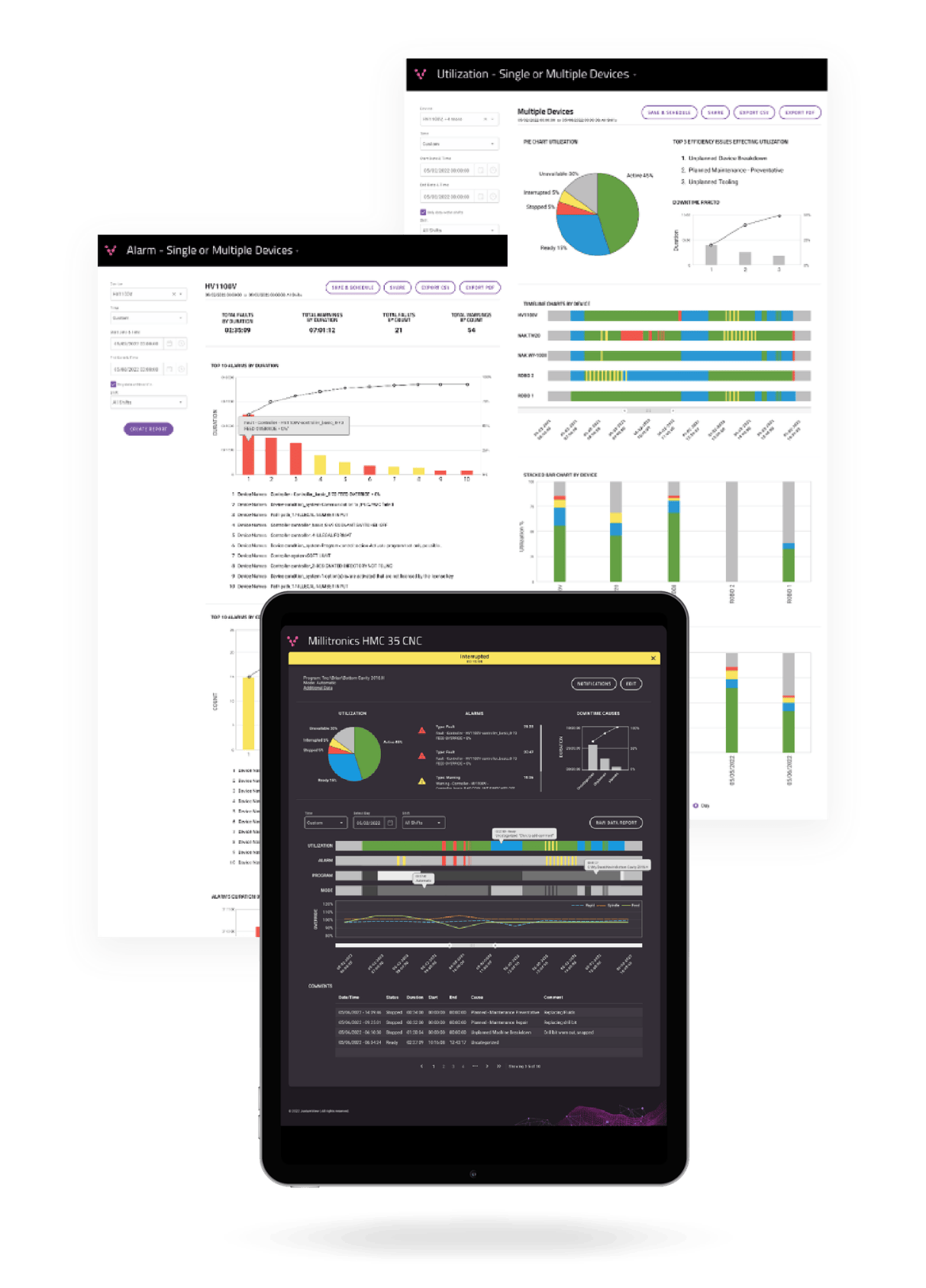
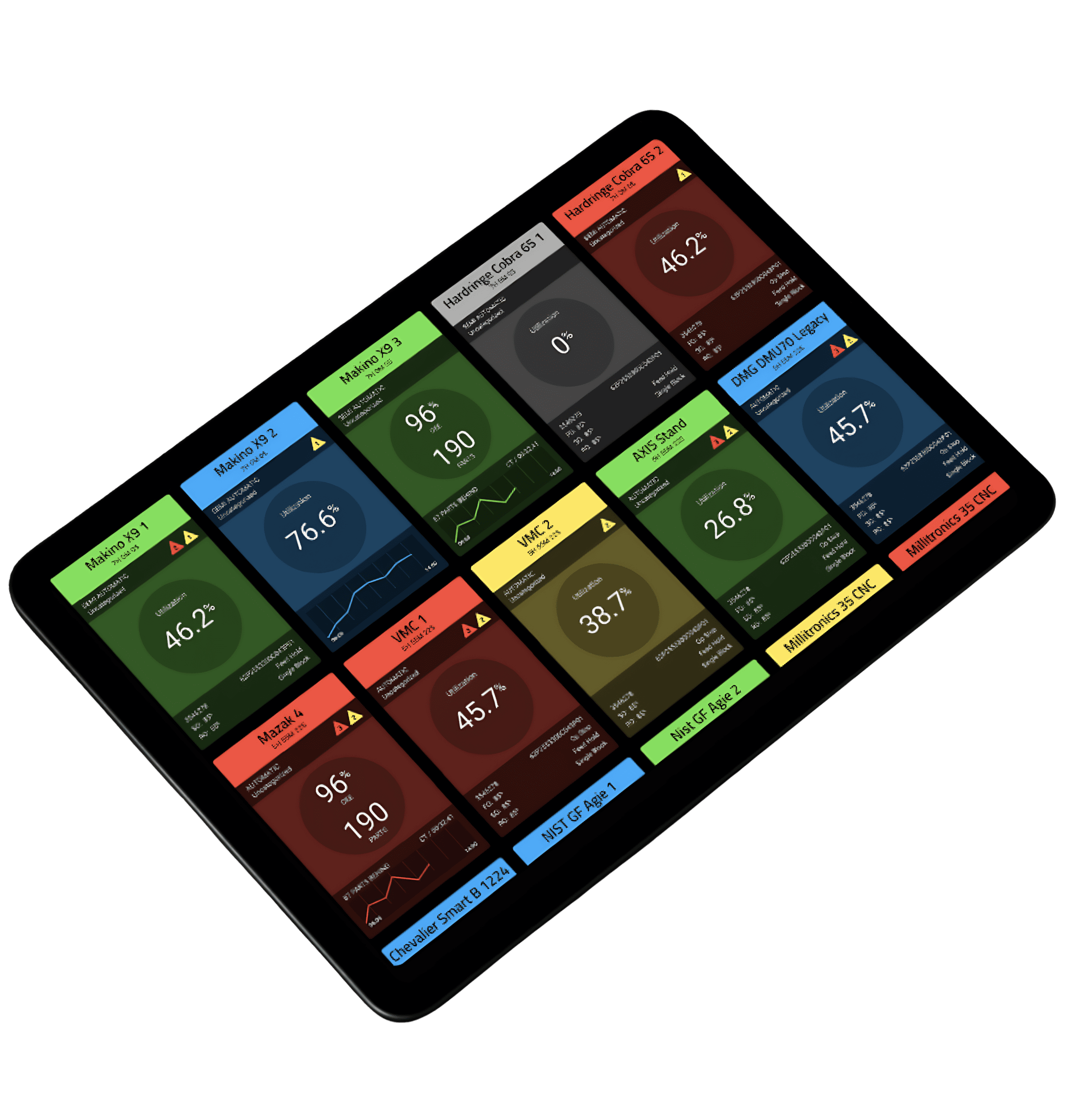
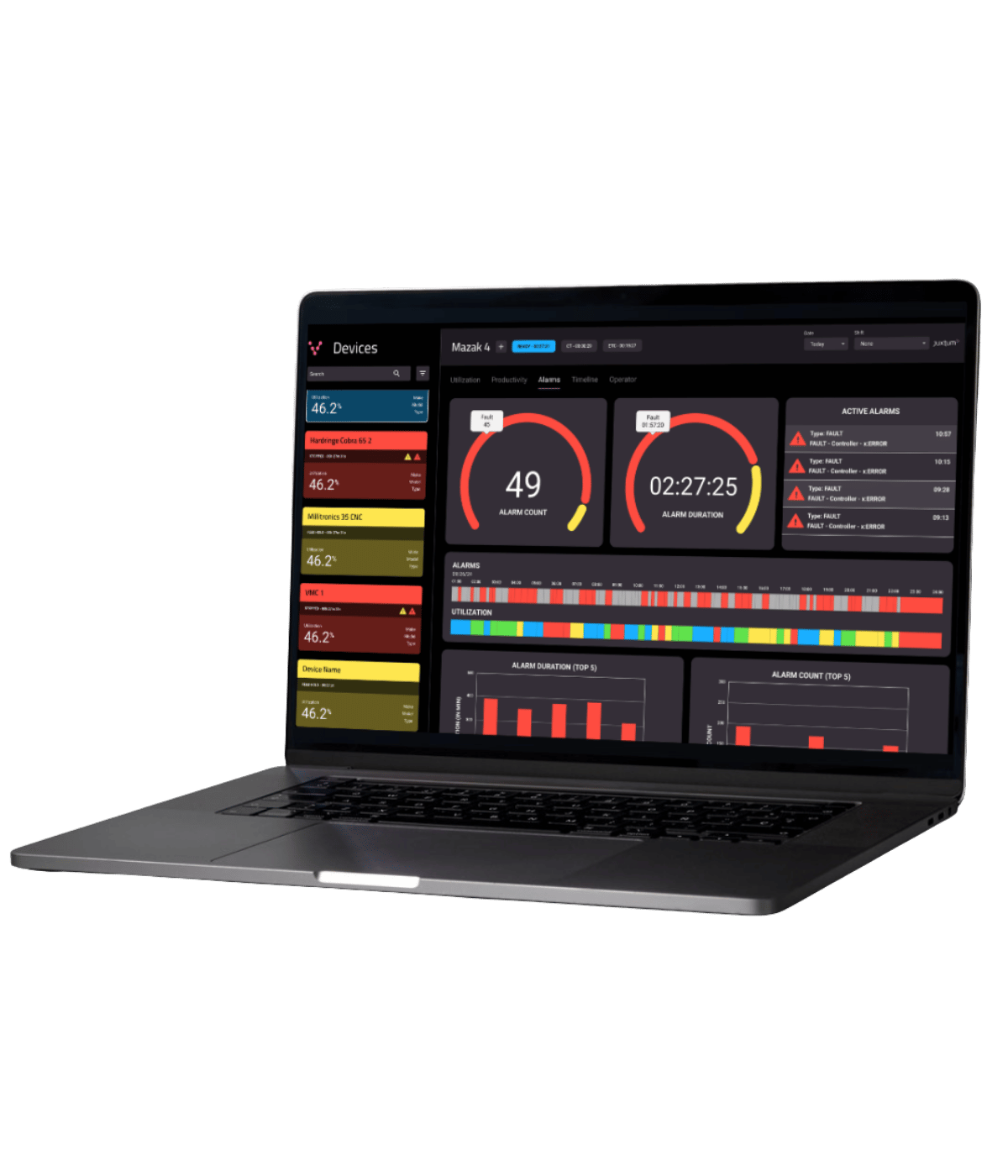
Juxtum View translates continuous machine data into real-time dashboards, utilization reports, downtime reports, alarm reports, and production analytics, giving operations teams and plant managers a live view of shop floor performance across every connected asset. Alerts surface the conditions that matter: machines running outside normal parameters, cycle times drifting from target, alarm patterns that indicate developing equipment issues. When a machine begins running slower than scheduled, the team knows immediately, not when the shift report gets compiled.

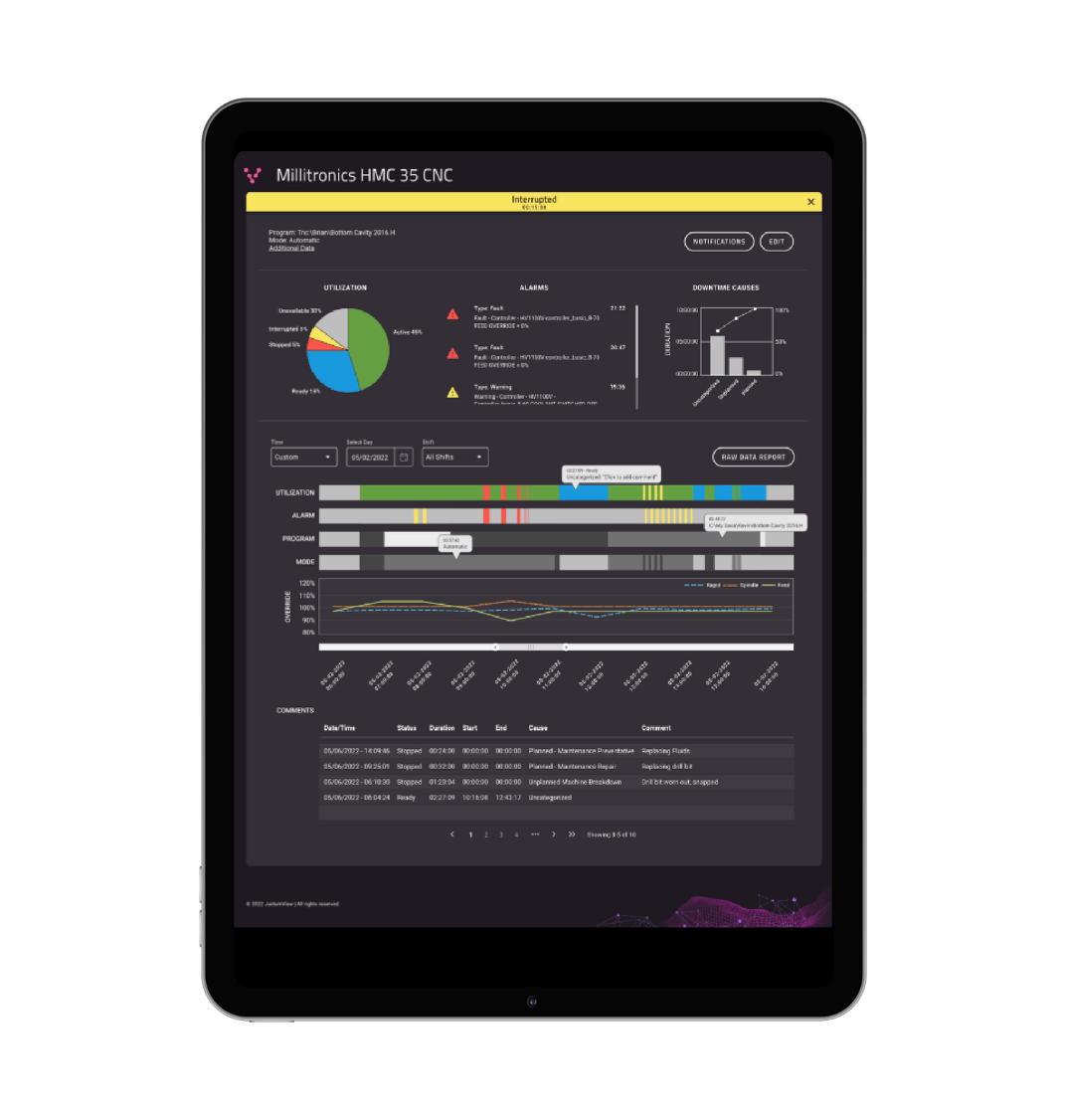
Every unplanned stoppage represents both a production loss and a data point. Juxtum captures the alarm and signal history surrounding downtime events, giving maintenance teams and process engineers the equipment data needed to identify patterns. Which assets fail most frequently, under what operating conditions, and whether the failure mode recurs. That visibility is what separates reactive maintenance from a systematic approach to eliminating production losses that repeat.

Process optimization is not a one-time initiative. It is an ongoing practice that compounds over time when it is built on a reliable data foundation. The same machine data layer that supports utilization tracking and downtime analysis today can support more advanced condition monitoring, predictive maintenance, and data-driven process control as your operation’s digital maturity grows, all on the same foundation, with no solution swap required.

THE IMPACT

What Manufacturers Achieve With Better Shop Floor Data
Better real-time machine data does not just reduce costs. It expands what your operation can produce with the equipment and workforce you already have. Customers connected through Juxtum routinely discover utilization gaps between assumed and actual performance that represent meaningful recoverable capacity. One manufacturer found that machines scheduled to run for seven hours were averaging six hours and fifteen minutes of actual production time. That forty-five-minute gap per machine translated directly into recoverable throughput without additional capital investment. Real-time visibility into utilization and cycle time performance is what makes that kind of discovery possible.

When production data is accurate and available in real time, operations teams can quote jobs more confidently, schedule more precisely, and respond to production shifts without waiting on manual reports. Plant managers gain a reliable view of performance across the entire operation. The decisions that drive process improvement become data-driven rather than experience-driven.

Continuous improvement requires continuous measurement. When every asset on the shop floor is streaming standardized data, process optimization initiatives have an objective baseline to measure against. Every change, adjustment, or intervention produces a data record that tells you whether it worked. That feedback loop is what separates operations that improve steadily from those that cycle through the same problems.

MINUTES TO INSIGHT, THOUSANDS IN SAVINGS

An aircraft engine manufacturer in Cincinnati turned reactive maintenance into a proactive, data-driven operation using Juxtum’s condition-based monitoring. By deploying sensors with MT Connect® capabilities, the team gained real-time visibility into equipment health across critical machines, allowing them to identify and correct issues immediately.

OUR EDGE

Why Manufacturers Choose Juxtum for Process Optimization

Connect everything

Most shop floors run a mix of equipment vintages, brands, and control types. Juxtum’s patented adapter software connects to virtually any manufacturing asset, including legacy equipment and control types that competing solutions cannot reach, and standardizes the data it generates automatically, without production interruption. For most CNC machines, data is flowing within approximately ten minutes of deployment.

Flexible deployment for operational requirements

Juxtum deploys in the cloud for rapid time-to-value, or fully on-premises for manufacturers with strict data security requirements. This is a critical distinction for aerospace and defense facilities where production data must stay within facility boundaries. Most machine monitoring solutions offer cloud only. Juxtum gives operations teams the choice.

Integrated data collection and visualization

Juxtum View builds directly on top of Juxtum Connect, adding real-time dashboards, production monitoring, downtime reports, alarm reports, and utilization analytics in a single integrated platform. It is not an ERP or MES. It fills the data gap those systems cannot address and delivers standardized shop floor data to the platforms your team already relies on.

“Juxtum gave us a clear view of where production time was being lost. We’ve been able to recover capacity and improve utilization without changing our equipment or adding headcount.”

– Nathan S., Plant Manager, Cleveland, OH

Find Out Where Your Next Productivity Gain Is Hiding

The capacity to produce more is already on your shop floor. The manufacturers who find it fastest are the ones with the clearest, most complete picture of what their equipment is actually doing. If your process optimization efforts are limited by incomplete or manually collected production data, that is a solvable problem, and the solution does not require replacing the equipment you already own.

Manufacturing Process Optimization FAQs

Effective process optimization begins with trustworthy, up-to-date data from every machine across the shop floor. Methods such as lean manufacturing and bottleneck analysis rely on having clear, unbiased information. If data collection isn’t consistent, optimization efforts are often based on incomplete or speculative information.

Production processes often run across a mix of control types, equipment vintages, and vendors. For example, a Fanuc machine might produce different data than a Siemens or Mazak, and older equipment might not connect to data systems at all. When machines aren’t connected and data isn’t standardized, you get an incomplete view of your operations, leading to missed opportunities for improvement.

Using manual methods like clipboards and spreadsheets can slow down information flow and leave gaps in what you know about your production. When data arrives late, you may miss your window to take action. Automating and standardizing how you gather data allows you to see the full picture of your shop floor and make decisions based on real-time facts, not outdated reports.

When every asset streams operational data in real-time, your team gains the ability to monitor cycle times, spot bottlenecks, measure job efficiency, and improve output based on facts instead of assumptions. This reliable data flow strengthens process control and analytics, giving you a practical foundation for data-driven improvements today and tomorrow.

You first need to establish a reliable way to collect data from every machine, no matter its make, age, or control system. Standardizing machine-level data lets your team track production monitoring, run manufacturing process optimization initiatives, and expand successful changes throughout your production processes with confidence, while supporting continuous improvement across your shop floor.

Get More From Your Shop Floor

The data you need is already in your machines. Juxtum makes it actionable so you can turn production into performance that moves your operations forward.